
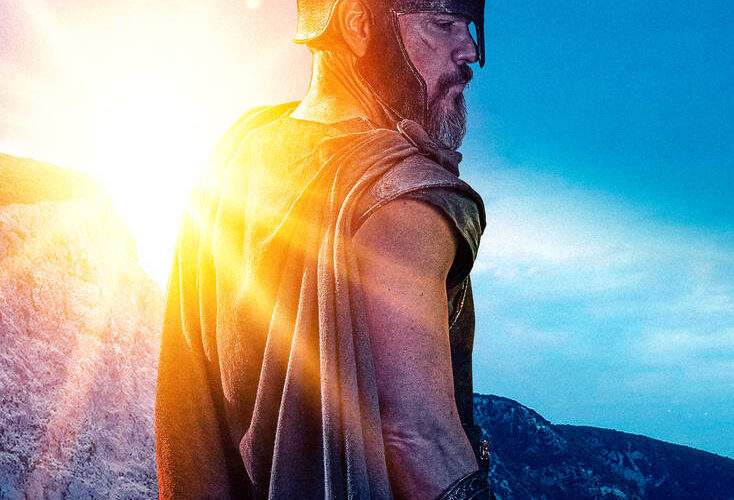
Coming Home can be strange. Often we cannot go back to the person we are before trauma. That version of us no longer exists. At the very best, we may get to the new baseline of safety.
So to some definitions. Odysseus means “victim of enmity”. With grim resolution we accompany the actors as they navigate a battlefield of loss. Odysseus wants to connect with his wife, his son, and his land. The word Odyssey is re-contextualised as a devastating psychological reckoning with memory, guilt and trauma. The Odyssey morphs into a story about a broken soldier forcing himself to survive his own crushing guilt.
Crafted so beautifully, we realise we are not in control of everything, even if we think we are. The question of values and virtues emerge as we lift our performances to another level.
Odysseus allows his traumatic journey to strip away his armour, leaving behind a sensitive, careworn, and deeply compassionate leader who understands that true power is meaningless without human dignity.
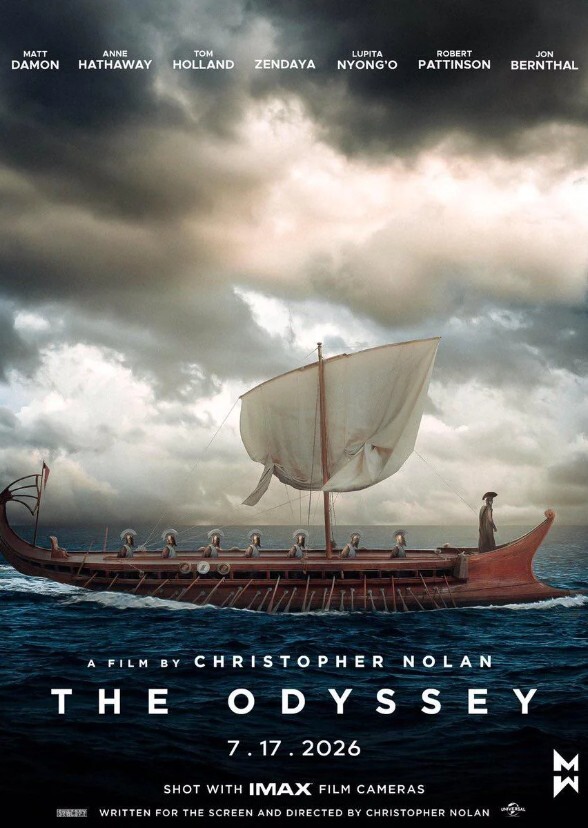
Christopher Nolan’s film (2026) masterfully features deeply profound and poetic dialogue that explores the psychological weight of the protagonist’s long journey home, touching upon themes of fate, survival and family dynamics. There are profound sentences threaded through The Odyssey (2026) such as:
- “Don’t look for gods in men, you’ll always be disappointed.
- “You’re a man that needs to control his fate. You can’t control this.”
- “Who does not understand pain? “
- “No one can stand between me and home.”
- “Help me go home”
- “My dad is coming home”
- “Bring it all”.
- “Keep us safe!”
Odyssey lives in the experiences of each of the characters , their struggles, emotions, and expressions as the realities of each of the characters shine through.
We witness the heavy burden of survivor’s guilt. Odysseus is plagued by the memories of his men. He was their commander; his core identity is tied to keeping them safe and bringing them back to Ithaca. Despite his technical brilliance, his strategic wit, and his constant fighting, the sea took every single one of them.
Some characters consume lotus flowers to erase and dull the sharp, burning edge of what they have witnessed.
We enter into Odysseus struggles with his memory, especially the weight of remembering, pitched against the benefit of forgetting. He is caught between the agony of replaying his trauma and the fear of losing his core identity if he forgets. The Odyssey transitions into a battle against memory , a mental trek through fractured time.
A call to reality: Returning to a Home that has changed
True healing doesn’t mean pretending the storm never happened. Odysseus knows he is not the strongest and says so. “You are not always going to be the strongest or the fastest, so be the smartest”.
A chaotic sea journey of survival, torment, hunger , loss is heart wrenching. Telemachus, psychically wounded embarks on his own odyssey to find his father.
When Odysseus finally steps onto the shores of Ithaca , the geographical location is the same, but the climate is entirely unrecognisable. His home has been invaded by suitors, his son has grown up without him. The life he left twenty years ago has vanished. He cannot simply plug his old self back into his old life. He has to navigate a completely new beginning.
The Crown of Rags
The world Odysseus sailed through is very real. We observe an endurance of powerlessness – the painful process of a king losing his armour, his men, his name, and his status until he has nothing left but absolute patience and invisible hidden power.
His crew members repeatedly break fundamental cosmic and moral rules, Nolan highlights specific shifts in Odysseus’s character that allow him to survive the long journey home. .
Odysseus is ultimately spared while all his men perish. The pathways of sustainable leadership are shaped by accountability, structural alignment and absolute submission of his ego to “Zeus” law .
Moving from Hubris to Accountability
Odysseus experiences his own metamorphosis. He begins his journey relying on his own technical brilliance, cunning deceptions and the armour of a military commander. The sparing point is his shift from pride to accountability, undergoing a profound moral transformation, accepting he cannot overpower the laws of the universe with intellect alone. He is spared only when he stops fighting for his ego and completely submits his will to a higher order.
He is the only character who fiercely wrestles to keep his morals intact despite the tough decisions forced upon him. He explicitly respects the boundaries of hostility, shelters the vulnerable, and recognises that human life cannot be treated as a disposable asset. This deep alignment with universal cosmic laws act as his spiritual shield.
In contrast, the crew’s failures abound. Throughout their twenty-year odyssey, his men consistently violate the ancient code of xenia – the sacred law of mutual hospitality, kindness to strangers and respect for the divine. They slaughter sacred cattle, act out of short-sighted desperation, survival tactics, lack of discipline and greed.
The Rejection of Toxic, “Win At All Costs “
When Odysseus finally returns to Ithaca disguised as a beggar, his home has been completely overrun by aggressive toxic suitors who are bleeding the kingdom dry. There is a darker, more volatile world order.
By showing up without titles, Odysseus forces the toxic suitors to expose their true, unvarnished behaviours. The suitors completely dismiss him as a threat, allowing him to scope out their weaknesses. Odysseus blends perfectly into the background. The disguise acts as a cultural mirror. It forces the vandals to show their shadow side, clearly making it easy to establish firm, protective accountability walls when the armour is dropped. On his part Odysseus is able to weaponise his anonymity, have total freedom of movement paired with the element of surprise and see who have stayed loyal, while positioning himself perfectly to strike.
Testing the immune system
A stranger could easily be a god or king in disguise. Antinous instantly violates the code of treating a visiting stranger or beggar with profound kindness by treating the beggar with cruelty and contempt. The suitors believe they are dominating a helpless old man , their outward status has made them profoundly blind, their arrogance is letting a wolf close the cage door from the inside.
Nolan’ version of the Odyssey cleanses Odysseus of unnecessary cruelty. When he locks the doors to confront the suitors, he actively spares those who surrender and refuses to harm the innocent.
He executes justice cleanly , explicitly keeping his son Telemachus’s hand unsoiled by the carnage. He proves that true leadership holds firm boundaries and high accountability without sliding into unnecessary, vindictive destruction.
The Hidden Power of Radical Anonymity
The shift of power subverts the traditional warrior dynamic. True strength doesn’t come from a crown or shining armour but from the patient , invisible plotting, self control and lethal intent allowed by Odysseus disguise.
When Odysseus sits with Penelope while disguised as the beggar, they share a deep and magical connection and he is able to comfort her without exposing her to danger. Because he is anonymous, the superficial, performative barriers of royalty disappear. They speak from the raw baseline of their shared history , grief and remembering.
In the third act, we see Odysseus, as the beggar blending into the shadows, pressed against the walls and pillars. He tests the loyalty of his servants, He observes the individual weaknesses of the suitors , plots their exact demises and maps out the physics of the final battleground. The class prejudice of the suitors becomes their fatal blind spot. Odysseus weaponises insignificance. His anonymity allows him to place himself exactly where he needs to be – standing right next to his legendary bow – before anyone realises the trap has sprung. The hidden power that was lurking in the shadows takes over the entire frame. When is the psychological reconnaissance (the architecture of the mind) over? How much longer can Odysseus restrain himself before unmasking his true identity?
The Unbridled Realisation: The Swan’s Homecoming
Odysseus is finally home, returning alone as a changed, war torn man who must rebuild a new moral identity rather than reclaim an old unblemished self.
The hood of anonymity is not a weakness, but a profound shield. Odysseus doesn’t win his home back by charging through the front gates with an army and shouting his titles. He wins it back by having the courage to show up as a beggar – soft, quiet and completely unmasked.
The message? You don’t have to perform, fight or rescue to be entirely valued.
Odysseus had to fight a twenty-year war to realise that his old warrior’s armour could not save his soul. He had to shed the shield , stand unmasked and accept his scars before he could truly come home.
Invitation
Odyssey wears a mask of sadness, uncovering the true cost of war. We witness the generational pain of the past. Throughout the movie the past and the present constantly bleed into one another. Odysseus is a soldier trying to survive the psychological aftermath of total warfare.
Traumatic Stress Disorder ( PSTD) manifests in intrusive vivid memories of traumatic events. We see PSTD induced hypervigilance and emotional numbing. Odysseus views his home as a hostile tactical environment. His trauma has stripped him of his ability to trust, forcing him to scan every room for threats and map out escape routes before he can feel safe.
It is challenging arriving back to a prewar state. Spouses, children, veterans struggle with moving on with their lives. They can only reckon with the damage and try to move forward. Penelope and Odysseus sail away together to see if they can slowly rebuild a new life from the ashes of his trauma.
Post Traumatic Growth (PTG ) refers to the positive psychological transformation that can occur after struggling with deeply challenging or traumatic life circumstances. It is the process of finding new meaning, resilience and personal strength out of profound suffering. Leaps in empathy, generative growth and brokenness bring an invitation to keep watching, keep listening, keep reading, keep learning, keep hoping and keep acting.
Homecoming (POEM by Tesse Akpeki )
An ancient warrior who has drifted home.
The heavy secrets I learned to tell.
But Ithaca is not the land he left behind
The old foundations have been swept aside
A different landscape meets the quiet mind
Where only truth and tenderness abide.
The odyssey is over, home is here
And in the mirror – the unbridled feeling of belonging.
The King returns, the beggar smiles and finds the home he’s earned
The tracks are clear, the stars at last align
And all the gold dust has to peace returned.